SpaceX has announced a sweeping update on its Starship lunar program, revealing a pace of progress that underscores the company’s ambitions and readiness to take humans back to the Moon.
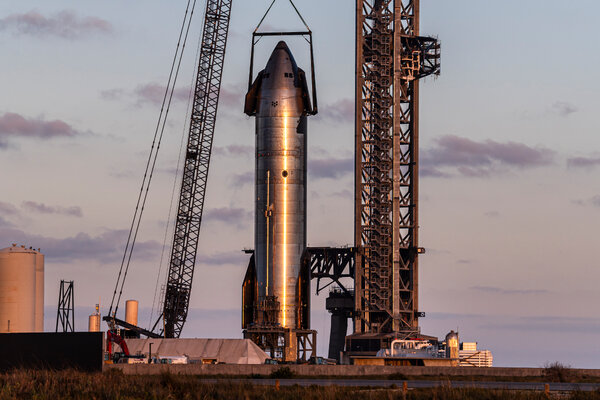
Since April 2023, SpaceX has conducted 22 integrated flight tests, built more than three dozen Starships, and produced 600 Raptor engines totaling 266,000 seconds of runtime. Among the milestones: catching the world’s most powerful rocket mid-air, transferring cryogenic propellant in orbit, and achieving controlled atmospheric reentries feats once considered impossible.

NASA’s decision to select Starship as the Artemis lunar lander came after a competitive review, with SpaceX earning the highest technical ratings and lowest cost. The vehicle’s engineering scale is extraordinary its pressurized cabin surpasses the entire habitable volume of the International Space Station, and each airlock dwarfs that of the Apollo lander. Cargo variants can deliver 100 metric tons of payload, from habitats and rovers to nuclear reactors, directly to the lunar surface.
SpaceX reports having completed 49 NASA milestones, most ahead of schedule, including full-scale testing of life-support systems, landing leg verification on simulated lunar soil, and engine cold starts. Two major tests are slated for 2026 a long-duration orbital mission and ship-to-ship propellant transfer, a critical step toward sustainable lunar logistics.
This isn’t another Apollo. SpaceX envisions a permanent lunar presence, built not on one-off missions but on an industrial-scale supply chain — marking the dawn of sustained human exploration beyond Earth.